
Communication Is Entering a New Era
Held on June 24 during the PR in Cannes Festival, ICCO PR in Cannes 2026 confirmed that the communications industry is entering a new phase. Artificial intelligence is no longer simply a tool for automating workflows—it is becoming an integral part of the media ecosystem. AI is changing how both people and technology discover information while simultaneously increasing the importance of trusted relationships, high-quality data, and meaningful communication measurement.
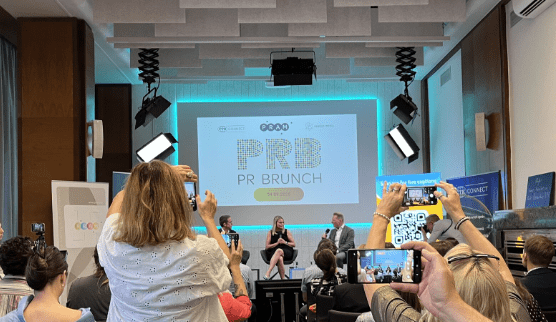
This year’s program featured keynote presentations, panel discussions, and networking events exploring the future of communications. Speakers discussed how AI is transforming PR and marketing, how brands can build credibility in the age of large language models (LLMs), how communication impact should be measured, and the growing strategic role of data and media intelligence.
The agenda also covered the future of influencer marketing, geopolitical challenges facing communicators, the evolving role of CEOs as brand ambassadors, and the concept of Relationship Capital—the value organizations create through trust and long-term stakeholder relationships.
Relationship Capital: PR's Most Valuable Asset
Although artificial intelligence dominated this year’s discussions, technology itself was not the event’s main message. The conference demonstrated that as AI reshapes content creation and distribution, trust, credible information, and long-term relationships become increasingly valuable.
This is why the organizers chose The Era of Relationship Capital as the central theme of the event. The idea that trust-based relationships represent the most important competitive advantage resonated throughout the program—from discussions on leadership and strategic communications to data-driven presentations and debates about AI’s impact on media and public relations.
Speakers including Dr. Candace Steele Flippin (Page Society), Julia Omini (YouGov), Massimo Moriconi (ICCO / Omnicom PR Group Italy), and Khaled AlShehhi (UAE Government) explored the topic from different perspectives. Despite focusing on diverse areas of communications, they all emphasized the same principle: organizations must continue building trust, nurturing stakeholder relationships, and making decisions based on reliable data.
Artificial intelligence can dramatically accelerate content analysis and creation, but it cannot replace the trust that exists between brands, media organizations, and the public.
AI Is the New Media: How Media Intelligence Is Evolving
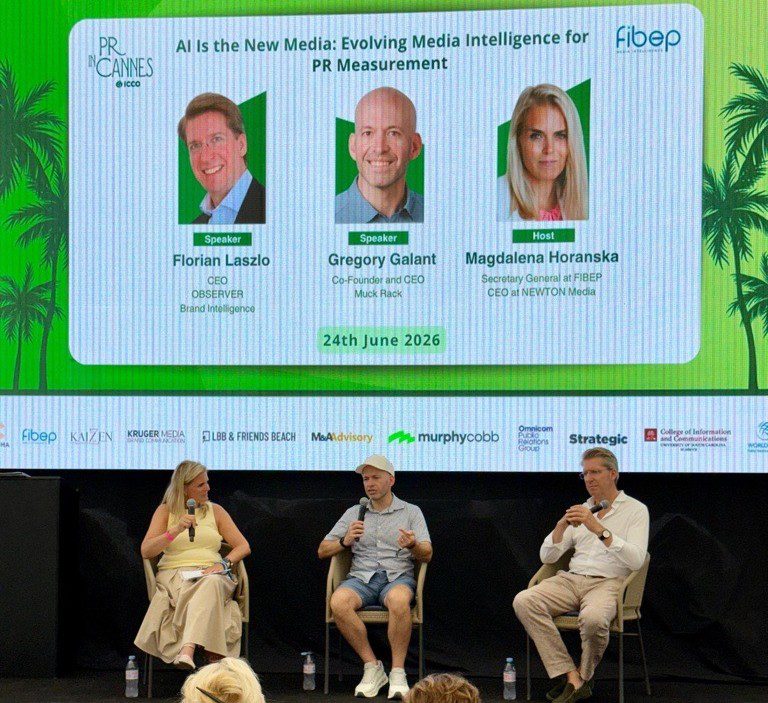
One of the featured speakers was Magdalena Horánska, CEO of NEWTON Media and Secretary General of FIBEP.
She moderated the panel discussion „AI Is the New Media: Evolving Media Intelligence for PR Measurement,“ which addressed one of the communications industry’s most pressing questions:
How should organizations measure communication impact when artificial intelligence itself has become a new media channel? The discussion brought together Magdalena Horánska, Gregory Galant, Co-founder of Muck Rack, and Florian Laszlo, CEO of Observer Brand Intelligence.
The panel reached a conclusion that is likely to shape the future of media intelligence. Communication professionals are no longer monitoring only traditional media, online news, or social platforms. Increasingly, organizations also need to measure their AI visibility—how systems such as ChatGPT, Gemini, or Microsoft Copilot interpret their brands, which sources these AI systems rely on, and what information they present to users. This fundamentally changes the way PR effectiveness is measured.
Counting media mentions or estimating reach is no longer enough. Organizations need to understand how their brands are represented within AI-generated responses, what context AI creates around them, and which information sources these systems consider trustworthy.
Measuring Communications in the Age of AI
One of the panel’s key conclusions was that AI increases—not decreases—the importance of high-quality data and expert interpretation. Artificial intelligence can analyze enormous volumes of content within seconds. However, real business value comes from understanding and interpreting the results correctly.
As a result, media intelligence is evolving beyond traditional media monitoring into a strategic discipline that enables organizations to:
- Measure brand reputation.
- Evaluate the real impact of PR activities.
- Monitor AI visibility.
- Identify emerging trends and reputational risks.
- Provide leadership teams with data for strategic decision-making.
FIBEP’s longstanding expertise in communication measurement standards and media intelligence contributed significantly to this discussion.

„AI has become a new communication channel whose content can be monitored and measured in much the same way as traditional media. Many FIBEP members, with decades of experience in media measurement, are already able to monitor and analyze the outputs of large language models, providing organizations with valuable insights into their AI visibility and helping them communicate more effectively in the age of conversational AI.“
— Magdalena Horánska, Secretary General of FIBEP and CEO of NEWTON Media
Brand Credibility Through the Eyes of AI
This discussion was complemented by a presentation from Patrik Schober, who shared findings from research conducted by Worldcom Public Relations Group in partnership with Semrush. The research focused on how large language models evaluate brand credibility. One of its most important conclusions was that organizations should begin viewing LLMs as an entirely new stakeholder group. Like people, AI systems evaluate trustworthiness—but they rely on their own signals when determining which sources and brands deserve credibility. This means communication strategies must increasingly consider not only human audiences but also the AI systems that are becoming key intermediaries in the information ecosystem.
Key Takeaways from PR in Cannes
If this year’s conference delivered one clear message, it was that the future of public relations will not be defined by artificial intelligence alone. Successful organizations will combine reliable data, modern AI-powered tools, professional media intelligence, and robust communication measurement.
Most importantly, they will continue investing in trust—building lasting relationships with customers, journalists, partners, and increasingly, the AI systems that shape how information is discovered and shared. According to the speakers at ICCO PR in Cannes, Relationship Capital—the value created through trusted, long-term relationships—will become one of the defining competitive advantages for modern organizations in the years ahead.